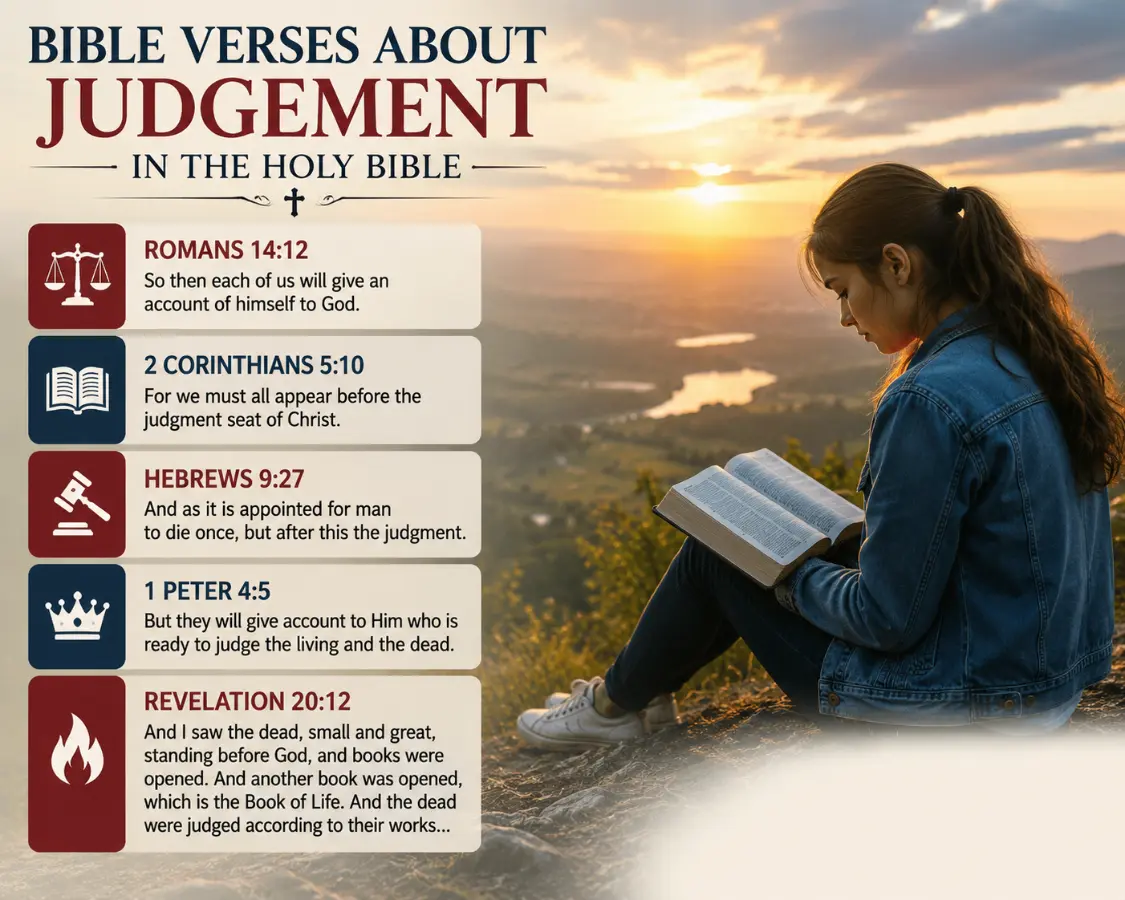
Bible Verses About Judgement reveal how God’s justice, mercy, and righteousness guide human life according to the Holy Bible. These scriptures help believers understand the difference between right and wrong while reminding them that God sees every action and intention of the heart.
Bible Verses About Judgement also encourage Christians to live faithfully, show compassion, and seek forgiveness through God’s grace.
Throughout Scripture, Bible Verses About Judgement teach that God’s judgment is always fair, holy, and rooted in truth. They provide wisdom for daily living, inspire spiritual growth, and remind believers to trust in God’s perfect justice rather than human opinions. By studying these verses, Christians can gain deeper faith, develop humility, and prepare their hearts to walk in obedience to God’s Word.
1. Matthew 7:1–2
“Judge not, that you be not judged. For with the judgment you pronounce you will be judged, and with the measure you use it will be measured to you.” — Matthew 7:1–2 (ESV)
Jesus warns against hypocritical and self-righteous judgment. This passage does not forbid discernment but condemns a critical spirit that ignores one’s own faults. Christians should approach others with humility, mercy, and grace.
In daily life, this verse encourages believers to avoid gossip, harsh criticism, and unfair assumptions. Before correcting others, Christians should examine their own hearts and actions.
Cross-reference: Romans 2:1
2. John 7:24
“Do not judge by appearances, but judge with right judgment.” — John 7:24 (ESV)
Jesus teaches that judgment should be based on truth rather than outward appearances. God values justice, wisdom, and discernment rooted in righteousness.
Modern believers can apply this verse by avoiding prejudice and superficial opinions. Instead of making quick assumptions, Christians should seek facts, pray for wisdom, and respond with fairness.
Cross-reference: Proverbs 31:9
3. Romans 2:1
“Therefore you have no excuse, O man, every one of you who judges. For in passing judgment on another you condemn yourself, because you, the judge, practice the very same things.” — Romans 2:1 (ESV)
The Apostle Paul reminds believers that hypocrisy is sinful. People often notice faults in others while overlooking their own sins.
This verse encourages self-examination and repentance. Christians should pursue humility and recognize their need for God’s grace before criticizing others.
Cross-reference: Matthew 7:3–5
4. James 4:11–12
“Do not speak evil against one another, brothers. The one who speaks against a brother or judges his brother, speaks evil against the law and judges the law. But if you judge the law, you are not a doer of the law but a judge. There is only one lawgiver and judge, he who is able to save and to destroy. But who are you to judge your neighbor?” — James 4:11–12 (ESV)
James teaches that ultimate judgment belongs to God alone. Speaking maliciously against others damages relationships and dishonors God’s commands.
In practical life, Christians should use words that encourage and restore rather than tear others down. Believers are called to show kindness and wisdom in conversations.
Cross-reference: Ephesians 4:29
5. Ecclesiastes 12:14
“For God will bring every deed into judgment, with every secret thing, whether good or evil.” — Ecclesiastes 12:14 (ESV)
This verse reminds readers that God sees everything, including hidden actions and motives. His judgment is perfect, fair, and unavoidable.
Believers can find comfort knowing that injustice will not last forever. This passage also encourages Christians to live honestly and faithfully before God.
Cross-reference: Hebrews 4:13
6. 2 Corinthians 5:10
“For we must all appear before the judgment seat of Christ, so that each one may receive what is due for what he has done in the body, whether good or evil.” — 2 Corinthians 5:10 (ESV)
Paul explains that every person is accountable to Christ. Christians will stand before Him and give an account of their lives.
This truth motivates believers to live with integrity, obedience, and purpose. It also encourages faithful service and spiritual growth.
Cross-reference: Romans 14:12
7. Romans 14:10
“Why do you pass judgment on your brother? Or you, why do you despise your brother? For we will all stand before the judgment seat of God.” — Romans 14:10 (ESV)
Paul teaches believers not to condemn one another over disputable matters. Unity and love are more important than prideful arguments.
Christians today can apply this verse by showing patience and respect toward fellow believers who may have different personal convictions.
Cross-reference: Romans 14:13
8. Psalm 9:8
“And he judges the world with righteousness; he judges the peoples with uprightness.” — Psalm 9:8 (ESV)
God’s judgment is always righteous and trustworthy. Unlike human judgment, His decisions are perfectly just and free from corruption.
This verse gives hope to those facing injustice or suffering. Believers can trust God to act rightly in every situation.
Cross-reference: Deuteronomy 32:4
9. Hebrews 9:27
“And just as it is appointed for man to die once, and after that comes judgment.” — Hebrews 9:27 (ESV)
This verse highlights the seriousness of eternity and accountability before God. Human life is temporary, but God’s judgment is eternal.
For Christians, this passage is a reminder to place faith in Jesus Christ and live according to God’s truth. It also encourages believers to share the Gospel with others.
Cross-reference: John 3:16–18
10. Micah 6:8
“He has told you, O man, what is good; and what does the Lord require of you but to do justice, and to love kindness, and to walk humbly with your God?” — Micah 6:8 (ESV)
This verse summarizes God’s desire for His people. True righteousness involves justice, mercy, and humility.
In everyday life, Christians can practice this teaching by helping others, showing compassion, and living faithfully before God.
Cross-reference: Matthew 23:23
Biblical Insights and Trusted Sources
The commentary in this article is based on biblical context and widely respected Christian study resources, including themes commonly explained in the ESV Study Bible, biblical concordances, and traditional evangelical teachings. Scripture quotations are from the English Standard Version (ESV), a trusted and widely used Bible translation known for accuracy and readability.
Care has been taken to present each passage faithfully within its historical and theological context to support trustworthy Bible study and Christian growth.
Conclusion
These Bible verses about judgement reveal important spiritual truths about God’s justice, mercy, and holiness. Scripture teaches that believers should avoid hypocritical judgment while still practicing wisdom and discernment. God alone is the perfect Judge, and His judgments are always righteous and fair.
For Christians today, these passages encourage humility, compassion, accountability, and faithful living. They remind believers to examine their own hearts, treat others with grace, and trust God’s perfect justice in every situation. By applying these biblical principles, Christians can grow spiritually and reflect Christ’s love in daily life.