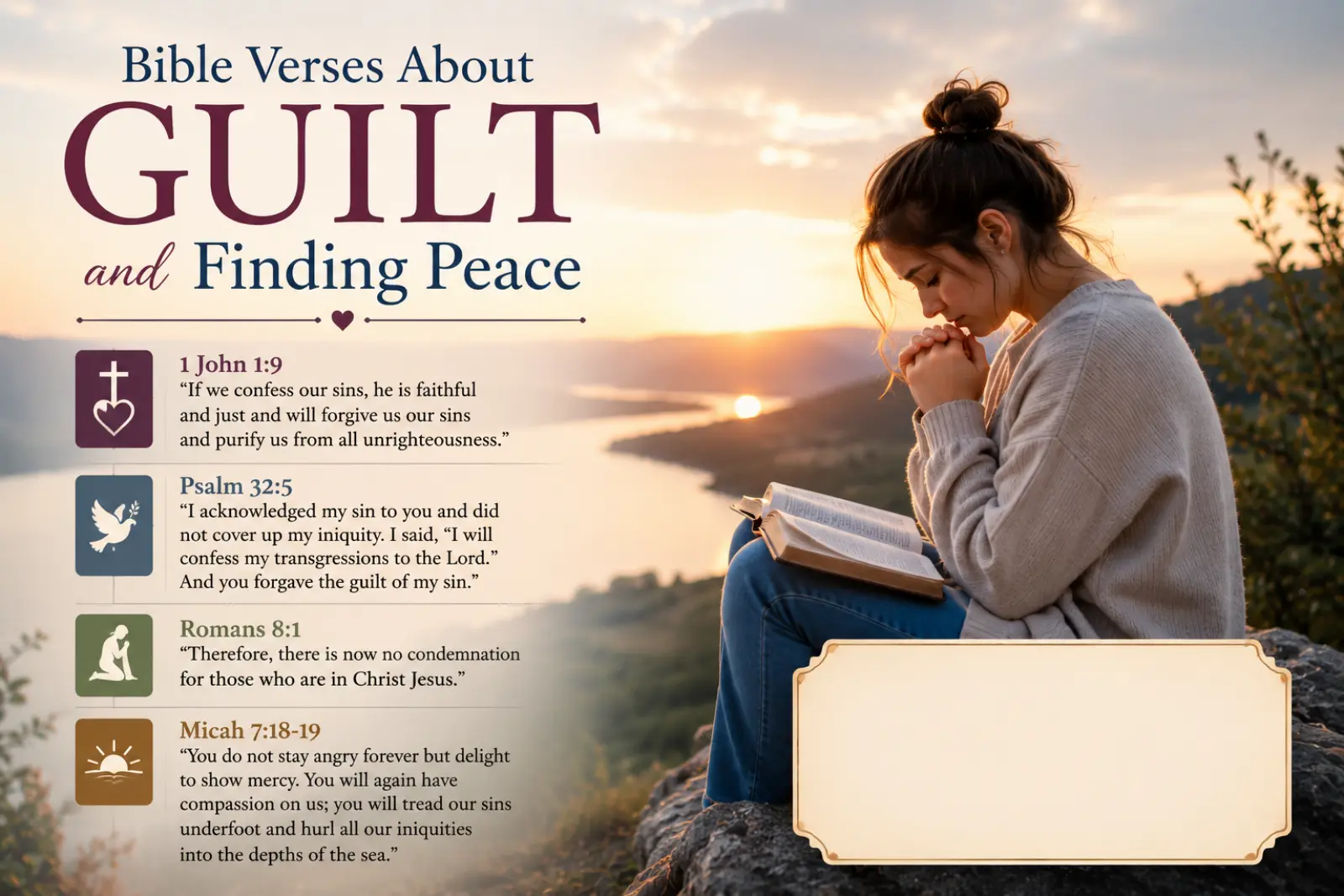
Guilt can weigh heavily on the heart, affecting emotions, relationships, and spiritual growth. The Bible offers hope, forgiveness, and healing for those struggling with regret and shame. These Bible Verses About Guilt and Finding Peace remind believers that God’s mercy is greater than any mistake and that true peace comes through faith, repentance, and trusting His promises.
Through prayer and Scripture, people can release their burdens and experience God’s comfort in difficult moments.
Reading and reflecting on Bible Verses About Guilt and Finding Peace helps strengthen faith and encourages a closer relationship with God. The Scriptures teach that forgiveness is available to everyone who sincerely seeks Him. Whether someone is dealing with past sins, personal failures, or emotional struggles, these verses provide reassurance that God’s love brings restoration and inner peace. Many Christians turn to Bible Verses About Guilt and Finding Peace for encouragement, guidance, and spiritual renewal during challenging seasons of life.
1. Psalm 32:5
“I acknowledged my sin to you, and I did not cover my iniquity; I said, ‘I will confess my transgressions to the Lord,’ and you forgave the iniquity of my sin.” — Psalm 32:5 (ESV)
Commentary
King David wrote this psalm after experiencing the heavy burden of guilt caused by sin. He discovered that hiding sin only increased his suffering, but confession brought forgiveness and peace.
This verse reminds believers that God invites honest repentance. When we confess our sins sincerely, God responds with mercy instead of rejection.
Practical Application
Do not carry hidden guilt alone. Pray honestly to God and confess what weighs on your heart. God’s forgiveness is greater than your failure.
Cross-Reference
See also 1 John 1:9.
2. 1 John 1:9
“If we confess our sins, he is faithful and just to forgive us our sins and to cleanse us from all unrighteousness.” — 1 John 1:9 (ESV)
Commentary
This verse offers one of the clearest promises of forgiveness in the Bible. God is faithful to forgive those who genuinely repent.
The cleansing mentioned here is not only spiritual but emotional. God removes the stain of guilt and restores fellowship with Him.
Practical Application
When feelings of guilt return, remember God’s promise. Forgiveness depends on His faithfulness, not your emotions.
Cross-Reference
See also Psalm 103:12.
3. Romans 8:1
“There is therefore now no condemnation for those who are in Christ Jesus.” — Romans 8:1 (ESV)
Commentary
This verse teaches that believers are no longer condemned because Jesus paid the penalty for sin on the cross. While Christians may still feel conviction, eternal condemnation has been removed.
Practical Application
If you have trusted in Christ, you do not need to live under constant shame. Learn to separate God’s loving correction from destructive self-condemnation.
Cross-Reference
See also John 3:17.
4. Psalm 38:4
“For my iniquities have gone over my head; like a heavy burden, they are too heavy for me.” — Psalm 38:4 (ESV)
Commentary
David describes guilt as a crushing burden. Many people today experience the same emotional weight from unresolved sin, regret, or past mistakes.
This verse honestly acknowledges the pain guilt can cause, while also pointing readers toward dependence on God.
Practical Application
Bring your emotional struggles to God in prayer. The Bible shows that even faithful believers wrestled deeply with guilt and sorrow.
Cross-Reference
See also Matthew 11:28-30.
5. Isaiah 1:18
“Come now, let us reason together, says the Lord: though your sins are like scarlet, they shall be as white as snow.” — Isaiah 1:18 (ESV)
Commentary
God speaks hope to sinful people. Scarlet symbolizes deep stain and guilt, yet God promises complete cleansing through His mercy.
This verse reveals the heart of God — He desires restoration, not destruction.
Practical Application
No matter how serious your past may seem, God’s grace is powerful enough to forgive and renew your life.
Cross-Reference
See also Ephesians 1:7.
6. Hebrews 10:22
“Let us draw near with a true heart in full assurance of faith, with our hearts sprinkled clean from an evil conscience.” — Hebrews 10:22 (ESV)
Commentary
Through Christ’s sacrifice, believers can approach God confidently. The phrase “evil conscience” refers to lingering guilt and awareness of sin.
Jesus not only forgives sin but also cleanses the conscience.
Practical Application
Do not let guilt keep you distant from God. Prayer, worship, and Bible study help strengthen assurance in Christ’s forgiveness.
Cross-Reference
See also Hebrews 9:14.
7. Psalm 103:12
“As far as the east is from the west, so far does he remove our transgressions from us.” — Psalm 103:12 (ESV)
Commentary
This beautiful image emphasizes the completeness of God’s forgiveness. God does not partially forgive; He fully removes sin from those who repent.
Practical Application
Stop constantly replaying forgiven sins in your mind. Trust God’s promise that your sins have been removed through His grace.
Cross-Reference
See also Micah 7:19.
8. 2 Corinthians 7:10
“For godly grief produces a repentance that leads to salvation without regret, whereas worldly grief produces death.” — 2 Corinthians 7:10 (ESV)
Commentary
This verse explains the difference between healthy conviction and destructive guilt. Godly sorrow leads people toward repentance and spiritual growth, while worldly guilt leads to despair.
Practical Application
Allow conviction to guide you toward change and healing instead of hopelessness.
Cross-Reference
See also Acts 3:19.
9. Proverbs 28:13
“Whoever conceals his transgressions will not prosper, but he who confesses and forsakes them will obtain mercy.” — Proverbs 28:13 (ESV)
Commentary
The Bible repeatedly teaches that confession brings spiritual freedom. Hiding sin often increases guilt and damages relationships with God and others.
Practical Application
Seek accountability and honesty in your spiritual life. Confession is part of healing and restoration.
Cross-Reference
See also James 5:16.
10. John 8:11
“And Jesus said, ‘Neither do I condemn you; go, and from now on sin no more.’” — John 8:11 (ESV)
Commentary
Jesus spoke these words to the woman caught in adultery. He showed both mercy and truth. Christ did not ignore sin, but He offered forgiveness and a new beginning.
Practical Application
Jesus invites believers to leave guilt behind and walk in transformed living through His grace.
Cross-Reference
See also Luke 15:11-24.
Understanding Guilt from a Biblical Perspective
The Bible presents guilt in two important ways:
- Conviction from God helps people recognize sin and seek repentance.
- Condemnation from the enemy keeps people trapped in shame and hopelessness.
Healthy conviction leads to spiritual growth, confession, and restoration. Unhealthy guilt keeps believers focused on past failures instead of God’s grace.
Christians can find peace by remembering these biblical truths:
- God forgives those who repent.
- Jesus already paid the price for sin.
- Believers are called to live in freedom, not constant shame.
- God’s mercy is greater than human failure.
Note About Commentary Sources
The explanations in this article are based on biblical context, trusted Christian teaching principles, and insights commonly reflected in study resources such as the ESV Study Bible and other evangelical Bible commentaries.bible-verses-about-guilt
Conclusion
The Bible offers hope for anyone struggling with guilt. From David’s confession in the Psalms to the forgiveness offered through Jesus Christ, Scripture consistently points believers toward grace, repentance, and restoration.
Guilt can remind us of our need for God, but it should never keep us from Him. Through confession, faith, and the promises of God’s Word, Christians can experience true forgiveness and renewed peace.
These Bible verses encourage believers to trust in God’s mercy, reject condemnation, and walk confidently in the freedom found through Christ.
Discover More Posts:
Bible Verses on Grace Top Scriptures for Faith and Salvation
Grace bible verses for hope and spiritual renewal
Bible Verses on God’s Love for Everyday Strength