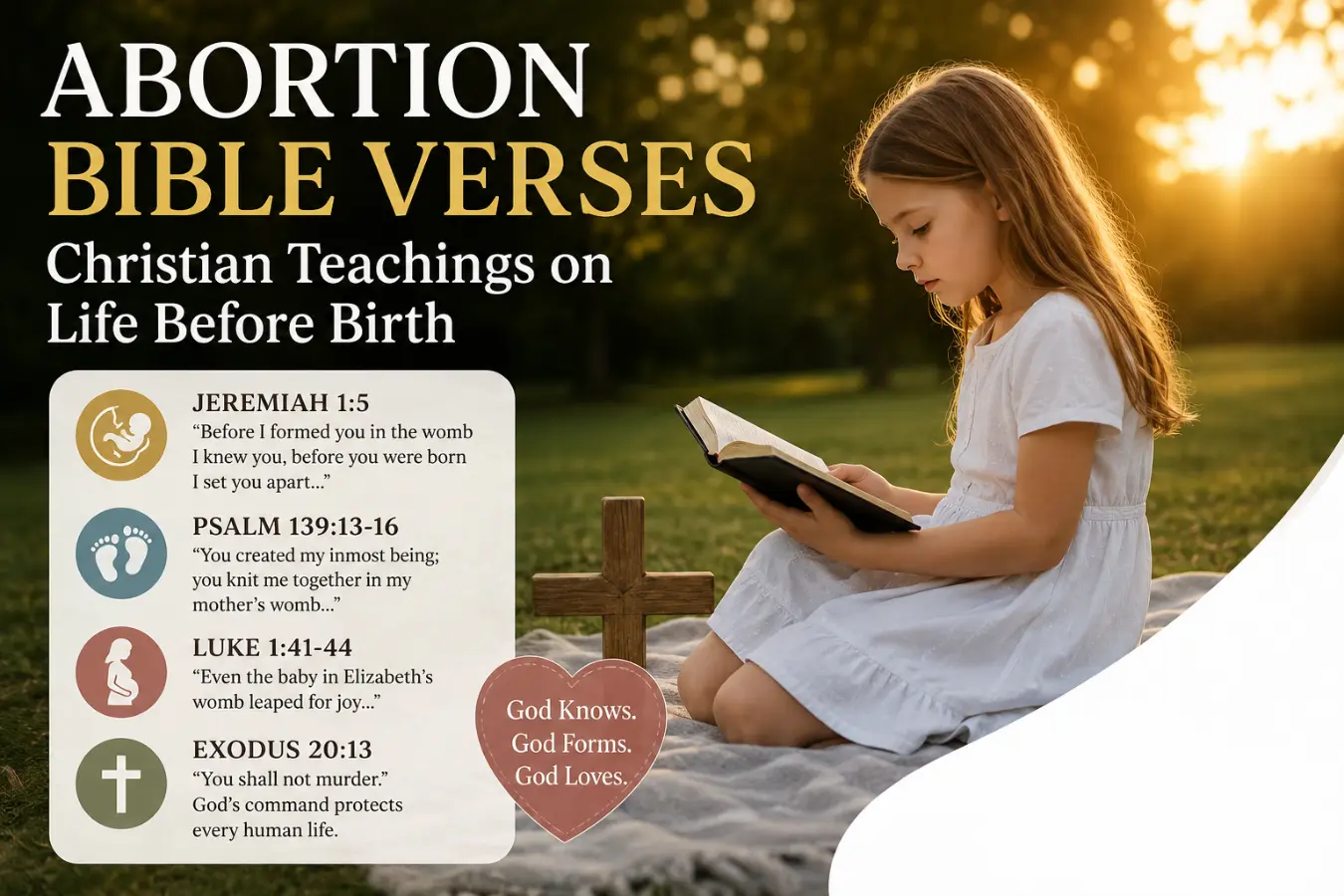
Understanding the topic Abortion Bible Verses Christian Teachings on Life Before Birth is important for readers seeking biblical perspectives on the value of human life before birth. Scripture often guides moral reflection, and Abortion Bible Verses Christian Teachings on Life Before Birth provides a framework for examining how faith communities interpret life, responsibility, and compassion.
Many believers study these passages to better understand how Abortion Bible Verses Christian Teachings on Life Before Birth connects with broader themes of creation, dignity, and spiritual purpose.
Through careful reflection on biblical teachings, individuals can explore how these messages shape ethical discussions and personal convictions. Overall, Abortion Bible Verses Christian Teachings on Life Before Birth encourages thoughtful engagement with scripture while considering both faith and moral responsibility in a modern context for deeper understanding and reflection.
1. Psalm 139:13–14
Verse: “For you formed my inward parts; you knitted me together in my mother’s womb. I praise you, for I am fearfully and wonderfully made.”
Commentary:
This passage highlights God’s intimate role in forming every human life. It suggests that life in the womb is not random but purposefully created. Practically, it encourages believers to value every human life, including the unborn, as part of God’s design.
Cross-reference: Job 10:8–12
2. Jeremiah 1:5
Verse: “Before I formed you in the womb I knew you, and before you were born I consecrated you.”
Commentary:
God tells Jeremiah that His knowledge of him existed before birth. This emphasizes divine purpose and foreknowledge. It is often used to show that human life has meaning even before physical birth.
Cross-reference: Isaiah 49:1
3. Luke 1:41–44
Verse: “The baby leaped in her womb… ‘For behold, when the sound of your greeting came to my ears, the baby in my womb leaped for joy.’”
Commentary:
This describes John the Baptist responding in the womb to Mary’s greeting. It suggests awareness and significance of unborn life. It also reflects joy and spiritual recognition even before birth.
4. Exodus 20:13
Verse: “You shall not murder.”
Commentary:
This commandment establishes the sanctity of human life. While not directly mentioning abortion, it is often applied in ethical discussions about intentionally ending innocent life.
Cross-reference: Genesis 9:6
5. Psalm 127:3
Verse: “Behold, children are a heritage from the Lord, the fruit of the womb a reward.”
Commentary:
Children are described as blessings, not burdens. This verse reinforces the idea that life from conception is valuable and given by God.
6. Job 31:15
Verse: “Did not he who made me in the womb make him? And did not one fashion us in the womb?”
Commentary:
Job recognizes that all humans share the same Creator. This supports equality of human life from the womb onward.
7. Isaiah 44:24
Verse: “Thus says the Lord, your Redeemer, who formed you from the womb…”
Commentary:
God identifies Himself as the One who forms life before birth. This shows intentional creation and divine involvement in human development.
8. Galatians 1:15
Verse: “But when he who had set me apart before I was born…”
Commentary:
Paul speaks of being chosen before birth. This reinforces the idea that God’s purpose for a person begins before physical existence outside the womb.
9. Ecclesiastes 11:5
Verse: “As you do not know the path of the wind, or how the bones form in the womb… so you do not know the work of God who makes everything.”
Commentary:
This verse acknowledges the mystery and divine involvement in fetal development, pointing to God’s sovereign creative power.
10. Genesis 1:27
Verse: “So God created man in his own image.”
Commentary:
All humans are made in God’s image, which gives inherent dignity and worth to every life stage, including the unborn.
Cross-reference: Genesis 5:1–2
Note on Sources
The commentary above reflects widely accepted biblical interpretations found in resources such as the ESV Study Bible, Bible Project teachings, and mainstream evangelical scholarship on biblical anthropology and human life.
Conclusion
The Bible does not directly use modern terminology like “abortion,” but it repeatedly emphasizes that human life is created by God, known by Him before birth, and carries divine purpose. These verses collectively highlight themes of dignity, creation, and moral responsibility.
For believers, these Scriptures encourage deep respect for life at every stage and thoughtful reflection on how faith informs ethical decisions. They also remind readers that every person is intentionally formed, known, and valued by God from the very beginning.
Discover More Posts:
Bible Verses About Nature Beauty in Mountains Rivers and Skies
James Bible Verses on Faith and Works in Christian Life
Christmas story bible verses Real Meaning of the Birth of Jesus