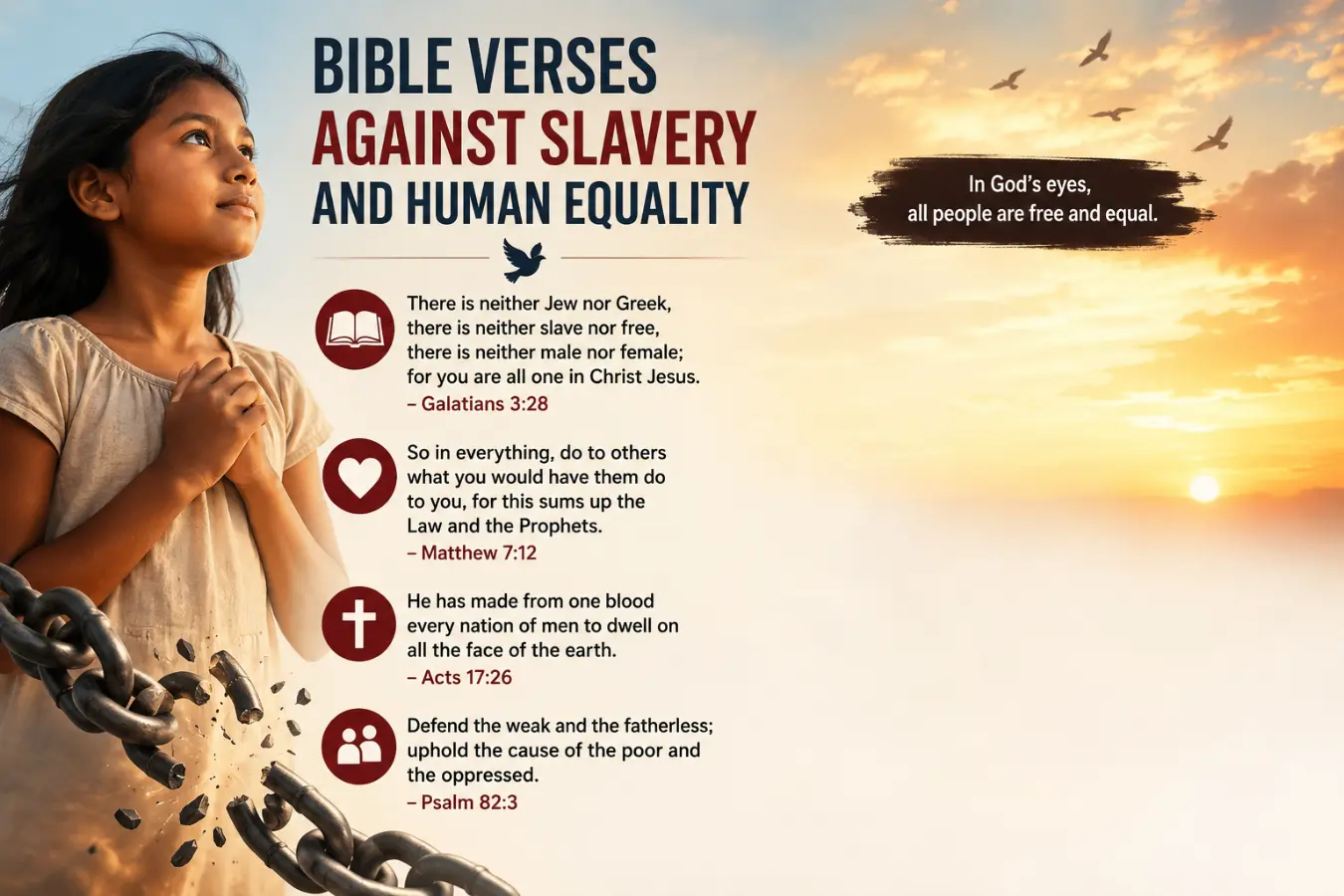
The Bible teaches that every person is created with equal value and dignity before God. Bible Verses Against Slavery and Human Equality reveal how Scripture encourages justice, compassion, and respect for all people regardless of status, race, or background. Throughout the Old and New Testaments, God’s Word speaks against oppression and reminds believers to treat others with love and fairness. These teachings continue to inspire Christians to stand for freedom, mercy, and human dignity in modern society.
Understanding Bible Verses Against Slavery and Human Equality also helps readers see the deeper biblical message of unity in Christ. The Bible repeatedly emphasizes that all people are equal before God and deserve kindness and respect. By studying Bible Verses Against Slavery and Human Equality, believers can better understand God’s desire for justice, peace, and compassion among humanity.
1. Galatians 3:28
“There is neither Jew nor Greek, there is neither slave nor free, there is no male and female, for you are all one in Christ Jesus.”
Commentary
This verse teaches spiritual equality before God. In Christ, social divisions lose their power because every believer shares equal value and identity in Him. Paul reminds Christians that no person should be treated as less important because of status, race, or position.
Practical Application
Christians should reject discrimination, racism, exploitation, and oppression. Churches and communities should reflect unity, respect, and love for all people.
Cross-Reference
- James 2:1–9
- Colossians 3:11
2. Exodus 21:16
“Whoever steals a man and sells him, and anyone found in possession of him, shall be put to death.”
Commentary
This verse strongly condemns human trafficking and kidnapping for slavery. Under God’s law, stealing a human being was considered a serious crime deserving severe punishment.
Practical Application
Believers should oppose modern slavery, forced labor, and human trafficking. Christians are called to defend vulnerable people and support justice.
Cross-Reference
- Deuteronomy 24:7
- 1 Timothy 1:10
3. Isaiah 58:6
“Is not this the fast that I choose: to loose the bonds of wickedness, to undo the straps of the yoke, to let the oppressed go free, and to break every yoke?”
Commentary
God desires sincere worship that includes justice and compassion. True faith involves helping the oppressed and removing burdens placed on others.
Practical Application
Followers of Christ should actively care for those suffering from injustice, poverty, abuse, or oppression.
Cross-Reference
- Micah 6:8
- Luke 4:18
4. Philemon 1:15–16
“For this perhaps is why he was parted from you for a while, that you might have him back forever, no longer as a bondservant but more than a bondservant, as a beloved brother.”
Commentary
Paul encouraged Philemon to receive Onesimus not merely as a servant but as a beloved brother in Christ. This reflects the transforming power of the Gospel in human relationships.
Practical Application
Christians should treat every person with dignity, kindness, and brotherly love regardless of social position.
Cross-Reference
- Ephesians 6:9
- Colossians 4:1
5. Luke 4:18
“The Spirit of the Lord is upon me, because he has anointed me to proclaim good news to the poor… to set at liberty those who are oppressed.”
Commentary
Jesus announced His mission to bring freedom, healing, and hope. His ministry focused on restoring people spiritually and socially.
Practical Application
Believers should continue Christ’s mission by helping the oppressed, supporting justice, and showing compassion.
Cross-Reference
- Isaiah 61:1
- John 8:36
6. Colossians 4:1
“Masters, treat your bondservants justly and fairly, knowing that you also have a Master in heaven.”
Commentary
Paul instructed masters to treat servants with fairness and justice because God judges all people equally. This teaching challenged harsh and abusive treatment common in ancient society.
Practical Application
Employers, leaders, and authorities should act with fairness, humility, and respect toward others.
Cross-Reference
- Ephesians 6:9
- Proverbs 14:31
7. Deuteronomy 24:14
“You shall not oppress a hired worker who is poor and needy.”
Commentary
God commanded Israel to protect workers from mistreatment and exploitation. Economic power was never meant to justify injustice.
Practical Application
Christians should support ethical treatment of workers and oppose exploitation in workplaces and society.
Cross-Reference
- James 5:4
- Proverbs 22:16
8. 1 Timothy 1:9–10
“The law is not laid down for the just but for the lawless… enslavers, liars, perjurers, and whatever else is contrary to sound doctrine.”
Commentary
Paul directly lists enslavers among sinful and ungodly behaviors. This passage clearly condemns slave trading and human exploitation.
Practical Application
Christians should stand against systems that abuse or exploit human beings for profit or power.
Cross-Reference
- Exodus 21:16
- Amos 2:6
9. Proverbs 31:8–9
“Open your mouth for the mute, for the rights of all who are destitute. Open your mouth, judge righteously, defend the rights of the poor and needy.”
Commentary
God calls His people to speak up for those who cannot defend themselves. Justice and mercy are central Biblical values.
Practical Application
Believers should advocate for the vulnerable and support organizations that fight injustice and human suffering.
Cross-Reference
- Isaiah 1:17
- Psalm 82:3–4
10. Amos 2:6
“They sell the righteous for silver, and the needy for a pair of sandals.”
Commentary
The prophet Amos condemned the exploitation of poor and vulnerable people for financial gain. God hates corruption and injustice.
Practical Application
Christians must avoid greed and defend ethical, compassionate treatment of all people.
Cross-Reference
- Micah 2:1–2
- Ecclesiastes 5:8
Biblical Context on Slavery
Understanding slavery in the Bible requires historical context. Ancient slavery often differed from later race-based slavery seen in modern history. In many cases, servitude in the ancient world was connected to debt, war, or economic survival. However, Scripture consistently moves toward justice, mercy, equality, and the value of every human life.
The teachings of Jesus and the apostles emphasize love, brotherhood, fairness, and freedom in Christ. Many Christian leaders throughout history used Biblical principles to oppose slavery and support abolition movements.
Trusted Study Sources
The commentary in this article is informed by respected Biblical resources, including:
- The ESV Study Bible
- NIV Cultural Backgrounds Study Bible
- BibleProject teachings on justice and human dignity
- Crossway Biblical commentaries
These sources help provide historical context and accurate interpretation of Scripture.
Conclusion
The Bible consistently teaches respect for human dignity, justice, compassion, and equality before God. While slavery existed in ancient societies, Scripture condemns oppression, kidnapping, exploitation, and abuse. Through Christ, believers are called to love others, defend the vulnerable, and treat every person as valuable in God’s sight.
These Bible verses against slavery remind Christians to pursue justice, protect the oppressed, and reflect God’s love in everyday life. They encourage believers to stand for freedom, fairness, and compassion in a broken world.
Discover More Posts:
Bible Verses About Abortion NKJV God’s Word on Life in the Womb
Abortion Bible Verses Christian Teachings on Life Before Birth
Bible Verses for Miscarriage Faith and Hope in Difficult Times