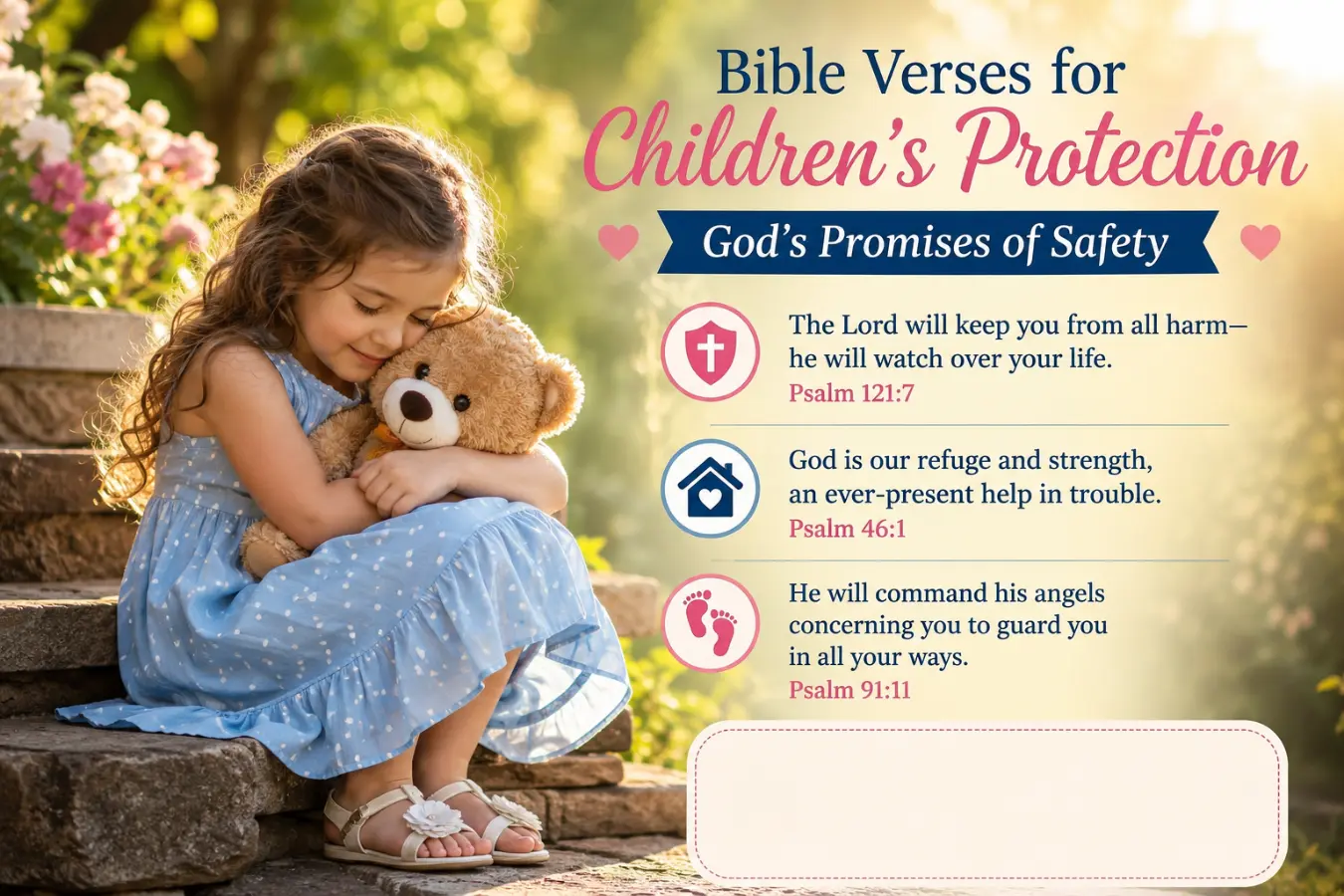
Bible Verses for Children’s Protection God’s Promises of Safety is a powerful theme in Scripture that reminds believers of God’s constant care over young lives. The Bible consistently highlights that God is a protector, shielding children from harm and guiding them with love, wisdom, and divine presence. In every season of life, families turn to Bible Verses for Children’s Protection God’s Promises of Safety to find assurance that God’s covering hand is always near.
The importance of Bible Verses for Children’s Protection God’s Promises of Safety lies in the comfort and confidence it brings to parents and guardians who seek God’s guidance for their children.
These verses strengthen faith, reduce fear, and encourage daily prayer for divine guarding and direction. Through Bible Verses for Children’s Protection God’s Promises of Safety, believers are reminded that God’s promises are not only spiritual truths but living assurances of security, peace, and lifelong protection for every child.
1. Proverbs 13:20
“He that walketh with wise men shall be wise: but a companion of fools shall be destroyed.” (KJV)
Commentary:
This verse teaches the powerful influence of friendships. Children naturally imitate those around them. Wise friends encourage good behavior, while harmful friendships can lead to poor choices.
Practical application:
Parents and mentors should guide children toward friends who respect God’s values.
Cross-reference: Proverbs 1:10–15
2. Ecclesiastes 4:9–10
“Two are better than one; because they have a good reward for their labour… For if they fall, the one will lift up his fellow.” (KJV)
Commentary:
Friendship provides emotional and physical support. God designed people not to walk alone.
Practical application:
Teach children to be supportive friends who help others in times of difficulty.
3. Proverbs 17:17
“A friend loveth at all times, and a brother is born for adversity.” (KJV)
Commentary:
True friendship is consistent, not temporary. It remains strong during difficulties.
Practical application:
Children should learn loyalty and kindness, even when situations become challenging.
4. John 15:13
“Greater love hath no man than this, that a man lay down his life for his friends.” (KJV)
Commentary:
Jesus defines the highest form of friendship as sacrificial love. This points to Christ’s love for humanity.
Practical application:
Encourage children to practice selfless love and care for others.
Cross-reference: Romans 5:8
5. Proverbs 27:17
“Iron sharpeneth iron; so a man sharpeneth the countenance of his friend.” (KJV)
Commentary:
Good friends improve each other’s character. Friendship is meant to build, not break.
Practical application:
Surround children with peers who encourage positive habits and moral growth.
6. Job 6:14
“To him that is afflicted pity should be shewed from his friend…” (KJV)
Commentary:
True friends show compassion, especially during suffering.
Practical application:
Teach children empathy and kindness toward those who are hurting or excluded.
7. Proverbs 18:24
“A man that hath friends must shew himself friendly…” (KJV)
Commentary:
Friendship requires effort, kindness, and humility.
Practical application:
Encourage children to take initiative in building healthy relationships.
8. Psalm 133:1
“Behold, how good and how pleasant it is for brethren to dwell together in unity!” (KJV)
Commentary:
Unity among friends and families brings joy and peace, reflecting God’s nature.
Practical application:
Teach children the importance of peace, teamwork, and avoiding conflict.
9. Proverbs 22:24–25
“Make no friendship with an angry man; and with a furious man thou shalt not go…” (KJV)
Commentary:
Negative influences can shape behavior and attitudes.
Practical application:
Guide children away from harmful influences that encourage anger or violence.
10. 1 Samuel 18:3
“Then Jonathan and David made a covenant, because he loved him as his own soul.” (KJV)
Commentary:
David and Jonathan demonstrate deep, loyal friendship built on trust and respect.
Practical application:
Children should learn that strong friendships are based on honesty, loyalty, and mutual care.
Cross-reference: 1 Samuel 20:42
Note on Biblical Sources
The commentary provided is based on general biblical interpretation consistent with traditional Christian teaching. Insights align with widely respected resources such as study notes found in the ESV Study Bible, though the verse text used here is from the public domain King James Version (KJV) for accuracy and accessibility.
Conclusion
Friendship in the Bible is not just a social connection.it is a spiritual influence that shapes character, decisions, and direction in life. Through these verses, we see that godly friendships protect children from harmful influences, encourage wise living, and reflect God’s love in daily relationships.
When children are guided toward wise companions and taught to be faithful friends themselves, they grow in safety, wisdom, and spiritual strength under God’s care.